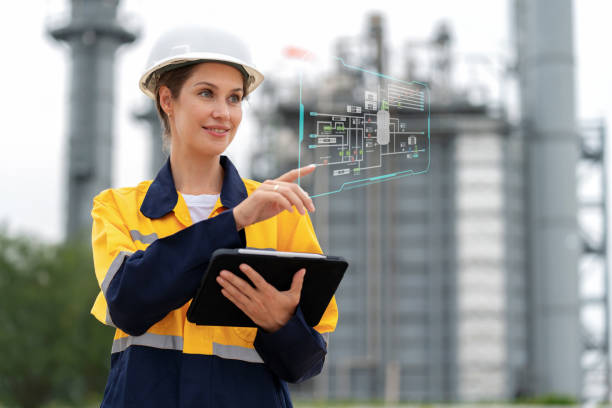
Given the current pace of industrial activity, it has become impossible for enterprises to depend on inspection visits or delayed reporting systems for managing their business processes. When an enterprise has to deal with manufacturing units, utility grids, oil and gas production units, or any such critical infrastructure, the business needs to have access to its operational data on a real-time basis.
This is where remote management and monitoring comes to the rescue. Using the combination of connected devices, cloud, Internet of Things sensors, and live analytics, it gives enterprises an edge over their competitors by providing them with visibility into the operations being carried out in various assets at any point of time. The organizations can not only solve the problems as soon as they arise, but they can also take measures for averting any such problems in the future.
What Is Remote Management and Monitoring?
Remote management and monitoring (RMM) refers to the use of digital technologies that allow organizations to supervise, control, and analyze equipment, systems, and infrastructure from a centralized location.
Rather than necessitating physical inspections by staff at all facilities, businesses can measure the status of assets via the use of software tools.
Modern remote monitoring management systems gather data using:
- Internet of Things sensors
- Industries control systems
- SCADA systems
- Smart metering
- GPS-based devices
- Network-connected machines
All of the data is securely transferred to dashboards from which managers get real-time updates, automated alerts, and insights into performance.
Why Real-Time Operational Visibility Is Important
Many times, large-scale industrial problems start out as minor glitches, which go unnoticed until they turn into big headaches.
Inadequate visibility could result in:
- Equipment malfunction
- Operational disruptions
- Safety breaches
- Higher maintenance costs
- Non-compliance
- Decreased efficiency
Real-time visibility helps managers identify any anomalies and take immediate steps to correct them.
Managers are notified instantly when the machine is not operating within acceptable parameters rather than having to wait for scheduled checks or reviewing reports manually.
Key Components of Remote Management and Monitoring
The most effective remote management systems use several technologies to ensure the connection of an operational environment.
IoT sensors
These IoT devices gather operational information including:
- Temperature
- Pressure
- Vibration
- Flow rate
- Humidity
- Energy usage
- Equipment state
Sensors form the basis for operational monitoring.
Cloud infrastructure
Using cloud infrastructure allows businesses to have access to operational information regardless of the geographical location, and without using local servers.
Different people in different locations are able to observe the same operational data.
Automated notifications
Automatically send notifications based on predefined thresholds in modern RMM systems.
Notifications can be related to:
- Overheating equipment
- Pressure changes
- Equipment outages
- Power failure
- Unauthorized access
- Connection problems
Early notifications allow organizations to solve their problems in advance.
Reporting and analytics
With the help of reporting, organizations are able to get valuable insights from the gathered information via dashboards and trends.
Managers will be able to see the recurring issues, analyze KPIs and take necessary actions.
Benefits of Remote Management and Monitoring
Improved Operational Efficiency
Remote visibility eliminates the need for frequent manual inspections while allowing operators to monitor multiple facilities simultaneously.
Automated workflows reduce administrative effort and improve resource utilization.
Reduced Downtime
Continuous monitoring will ensure that an organization detects any developing issues with the equipment before any breakdown.
Maintenance staff can plan for repairs ahead of time and not deal with any emergency breakdown. This will minimize production disruptions.
Improved Asset Performance
Real-time monitoring of equipment performance allows an organization to optimize its use.
Staff is able to detect poorly performing equipment, change operating conditions and maximize efficiency.
Reduced Operational Costs
Remote monitoring reduces the need for unnecessary visits to sites and cuts travel costs, maintenance cost, and production disruptions.
Prediction maintenance also extends equipment lifespan and lowers the cost of replacements.
Quick Decisions
Access to live operational data allows managers to react to changing circumstances without delay.
Rather than having to refer to old reports, decision makers can analyze current system performance and act accordingly.
Improving Worker Safety With Remote Monitoring
Safety of the workers has always been important for any business working in hazardous conditions.
Remote management and monitoring increase safety through constant surveillance of operational conditions.
Organizations can monitor:
- Gas leaks
- Pressure levels
- Overheating of equipment
- Integrity of pipelines
- Environmental conditions
- Status of emergency systems
Any abnormalities result in immediate notifications to responsible personnel.
This allows avoiding accidents and reducing the risk posed to employees working in remote locations.
Remote monitoring allows avoiding routine inspections performed by employees in hazardous environments and reducing the overall exposure of employees to work-related dangers.
Enabling Predictive Maintenance
Traditional maintenance is typically performed according to predetermined timeframes and without taking into account the current condition of equipment.
Remote monitoring and management allow conducting predictive maintenance through continuous analysis of asset performance.
For instance, performance changes that occur due to slight vibrations, temperatures, or pressure levels can be detected with the help of sensors and repaired before the equipment breaks down.
Benefits of predictive maintenance include:
- Reduced frequency of unplanned malfunctions.
- Equipment longevity.
- Cost savings on maintenance.
- Optimal spare parts planning.
- Improved availability of equipment.
Real-Time Monitoring Across Locations
Organizations operating in geographically dispersed locations often have difficulties with consistent monitoring.
The advantage of remote management is that it allows conducting consistent monitoring of operations across different locations from one interface.
Whatever is the type of facilities being managed (manufacturing plants, utility networks, transportation systems, power generation facilities), performance of facilities can be compared at the same dashboard.
Data-Driven Compliance and Reporting
Regulatory compliance requires accurate documentation and operational transparency.
Remote monitoring systems are able to automatically gather operational data, thus ensuring their digitization for audit and compliance purposes.
Reports that can be produced based on these data will concern such areas as:
- Inspections of equipment
- Environmental monitoring
- Performance of assets
- Maintenance activities
- History of incidents
- Operational KPIs
Automation of reporting makes manual documentation unnecessary and enhances data accuracy.
Future Trends in Remote Management and Monitoring Technologies
In line with the continued technological advancements, remote management and monitoring systems are expected to become more intelligent and independent.
Among others, there are several trends, which are as follows:
Artificial Intelligence
In the future, algorithms of artificial intelligence will be used to analyze operational data in order to predict incidents and suggest measures to prevent them.
Digital twins
Models of virtual assets will be used by organizations to model operational changes prior to their implementation in a real environment.
Edge Computing
It will allow processing operational data near connected devices, reducing latencies and allowing quicker reactions to operational incidents.
Autonomous operations
In the future, monitoring technologies will use drones and robotics along with intelligent sensors in order to perform autonomous inspections and even certain operational procedures.
Conclusion
In an increasingly connected industrial environment, remote management and monitoring has become essential for achieving real-time operational visibility. Through the use of IoT technology, cloud computing, automation, and analytics, organizations get an understanding of how well their equipment is performing at all times and how their business functions.
The ability to monitor equipment remotely and be able to take proactive measures through decision-making using the live data does not only enhance efficiency, but it improves safety and minimizes downtime. With advancements in technology like artificial intelligence, digital twin, and predictive analytics, the significance of remote management and monitoring of operations will become increasingly important.